
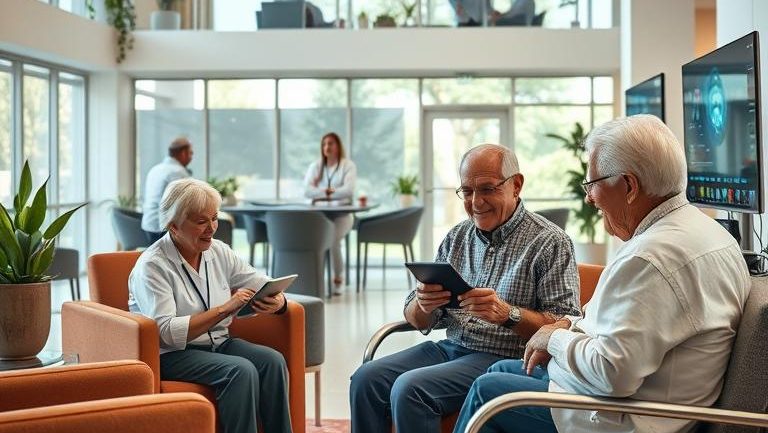
High-Tech, High-Touch: Why the Best Senior Care Uses Both Innovation and Community
- Tech enhances, doesn’t replace human care: Best senior care combines smart monitoring and devices with genuine human connection for healthy aging.
- Smart tools promote independence: AI meal planning, automated bills, and voice-controlled homes help seniors stay autonomous while remaining safe.
- Training programs bridge digital gaps: Specialized classes help seniors become comfortable with technology through in-person and virtual coaching.
Read Time: 7 minutes
The best senior care uses both technology and human connection. You don’t have to choose one or the other.
Smart tools make care easier. But they work best when combined with real relationships. Technology helps caregivers do their jobs better. It doesn’t replace them.
The Evolution of High Tech, High Touch Senior Care
Senior care has changed. It’s no longer just about medical supervision and meals.
Today’s seniors are:
- Living longer
- Staying more active
- Expecting independence with support when needed
Many seniors now use smartphones, tablets, and smart home devices daily. They’re more comfortable with technology than ever before.
This creates a great opportunity. Care providers can use technology to improve care quality. It makes care more personal, not less human.
Here’s how technology is transforming senior care:
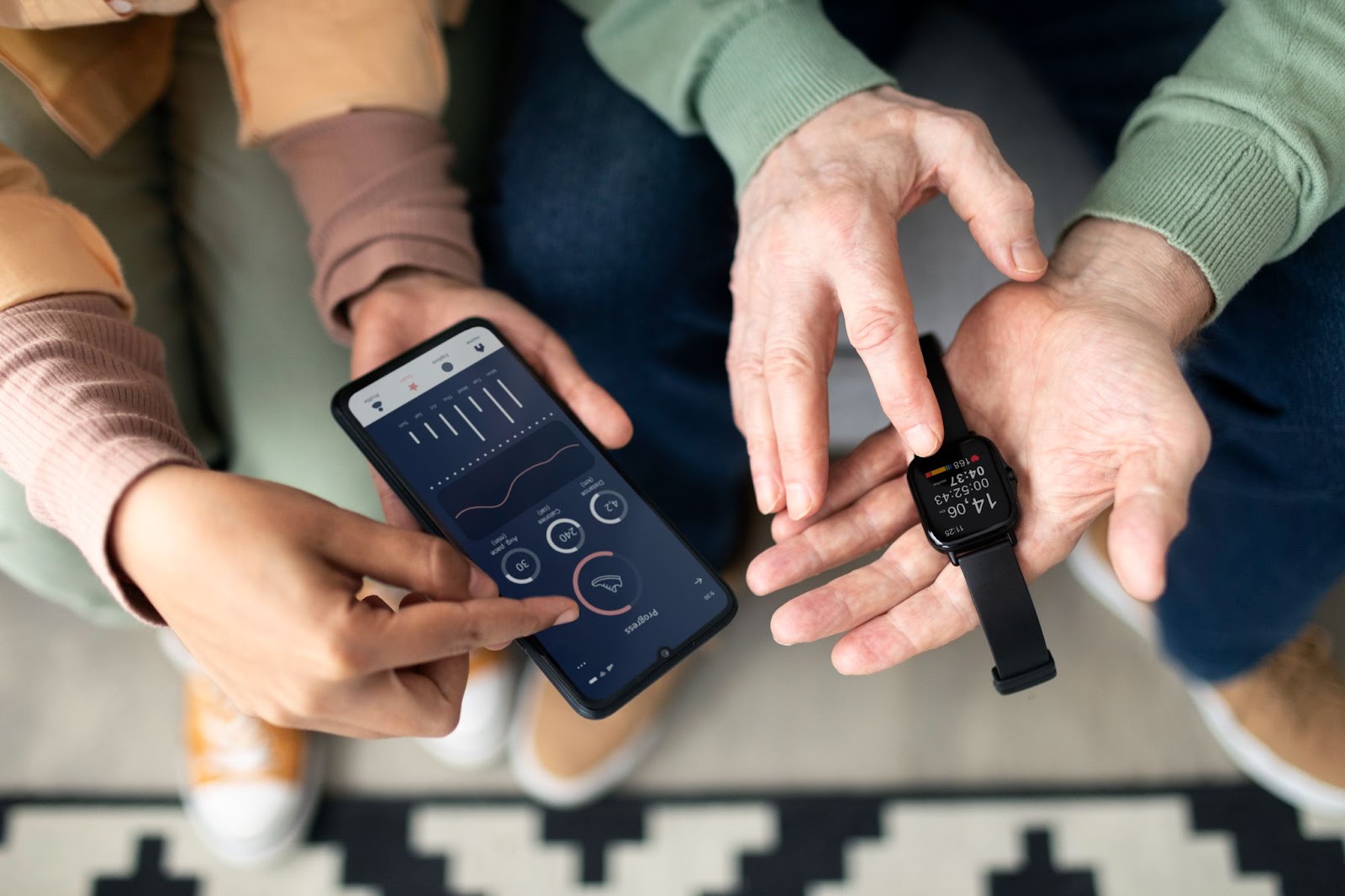
Smart Health Monitoring with Human Oversight
Wearable devices and sensors track important health data:
- Vital signs
- Sleep patterns
- Activity levels
These tools aren’t intrusive. They help care staff spot health issues early.
Real-world example: A senior’s sleep pattern suddenly changes. The system alerts staff. They check in gently to see what’s wrong. Or, activity data shows mobility is improving. Staff can celebrate this progress with the senior.
Telehealth and Virtual Care
Telehealth includes:
- Video calls with doctors
- Remote medication management
- Digital health platforms
These tools reduce stress. Seniors don’t need to travel to every appointment.
Who benefits most:
- Seniors with mobility challenges
- Those in rural areas
- Anyone who finds frequent travel difficult
For these seniors, telehealth can mean getting care instead of going without.
Safety and Independence
Smart home technology helps seniors stay independent. Families get peace of mind too.
Examples include:
- Medication dispensers with reminders
- Emergency response systems
- GPS devices for those with memory challenges
- Smart doorbell cameras
Family members can check in easily. They don’t have to be intrusive.
Connection and Engagement
Digital platforms help seniors stay connected:
- Video calls with family members
- Virtual attendance at grandchildren’s events
- Online communities with peers who share similar interests
- Virtual reality “travel” to places they can’t visit in person
Distance doesn’t have to mean disconnection.
The Irreplaceable Power of Human Connection
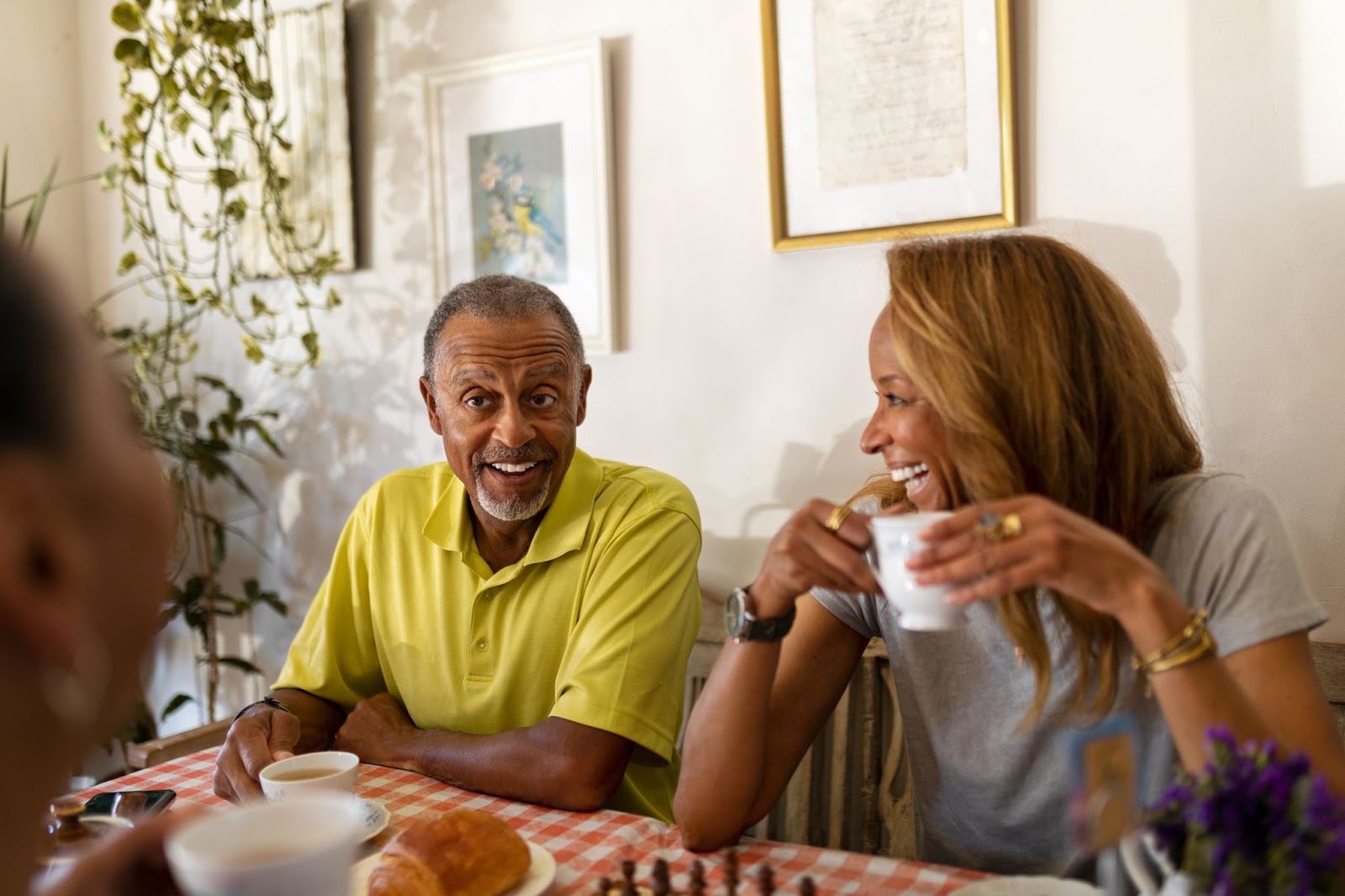
Technology is helpful. But it can’t replace human relationships.
Why connection matters:
Research shows social connection predicts:
- Healthy aging
- Mental wellness
- Overall quality of life
In senior care communities: Socialization is a main benefit. Shared activities and friendships improve wellness.
For seniors at home: Staying socially active is crucial. It prevents isolation and depression.
Finding the Sweet Spot: Integration, Not Replacement
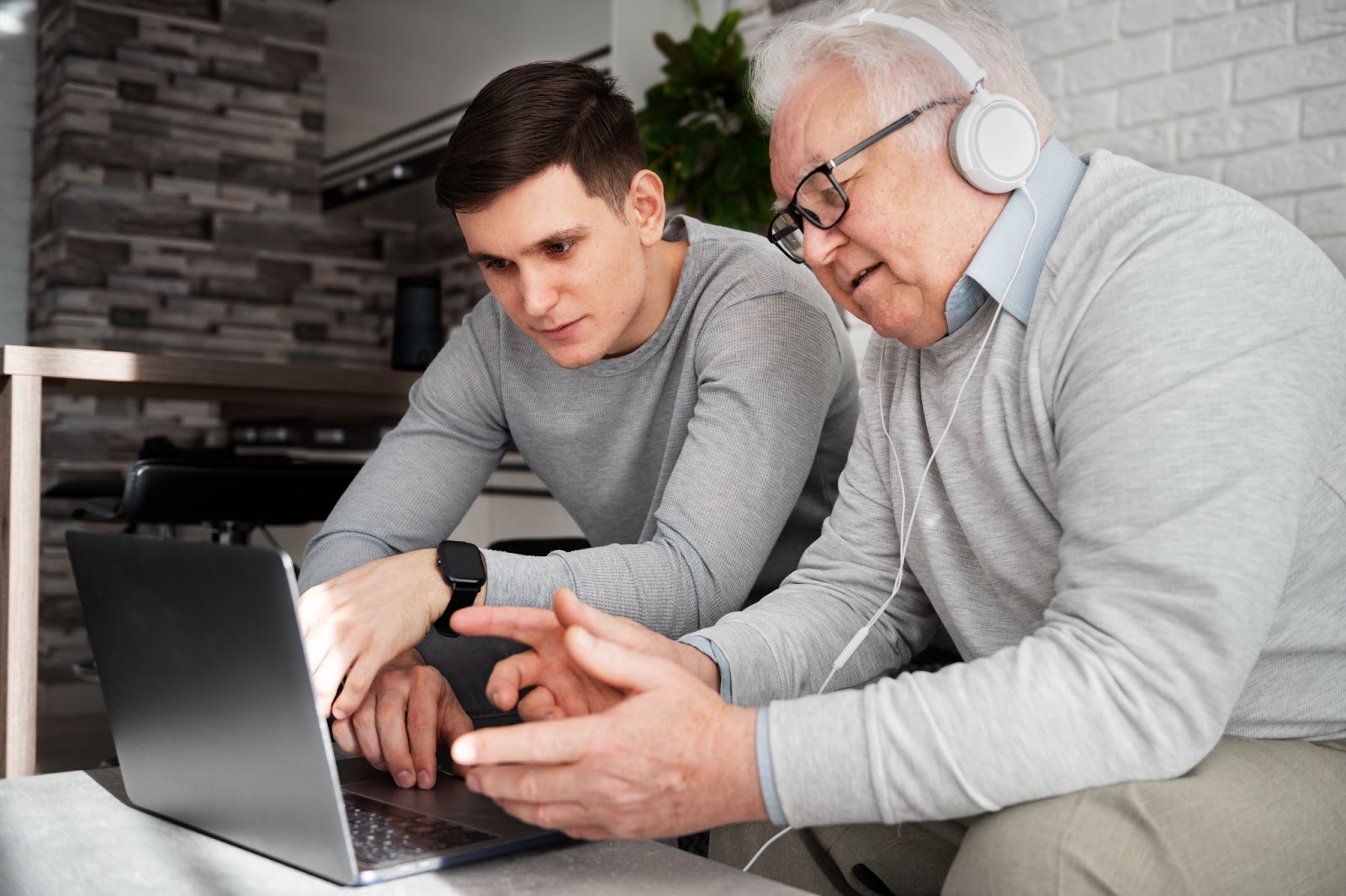
The best tools save time. This gives people more time for activities they enjoy.
Technology should create more human connection, not less.
Smart Home Integration Systems
Voice-activated assistants can:
- Make video calls
- Let caregivers monitor remotely
- Protect privacy
- Call for emergencies
Smart home hubs connect sensors throughout the home. They alert family to:
- Unusual activity patterns
- Potential problems
2025 top-rated options:
- Smart speakers with display screens
- Hub systems connecting multiple sensors
- Voice assistants with caregiver services
- Smart displays with privacy controls
AI-Powered Meal Planning and Grocery Delivery
Meal planning apps suggest recipes based on:
- Dietary preferences
- Allergies
- Health restrictions
Many apps connect to grocery delivery. They create shopping lists and arrange delivery automatically.
Prepared meal services:
- Dietitian-designed meals
- Chef-crafted recipes
- Easy to store and prepare
- Some covered by insurance or health plans
Top-rated apps:
- Mealime – Free, 30-minute meals, dietary customization
- Paprika – Recipe manager with smart grocery lists
- PlateJoy – Plans based on 50+ personal factors
- eMeals – 15 meal plan options
- Plan to Eat – Recipe collection and calendar planning
Most apps cost $5-$15 CAD monthly. Free versions available.
Resources:
AI-Powered Housekeeping and Home Management
Robotic cleaning:
- Navigates around mobility aids safely
- Provides thorough cleaning
- Detects hazards
Smart kitchen appliances:
- Guide you through cooking
- Shut off automatically for safety
- Can be monitored remotely
Voice-controlled systems manage:
- Lighting
- Temperature
- Security
No manual operation needed.
Smart home options include:
- Robotic vacuums with object detection
- Smart ovens with auto shut-off
- Voice-controlled lighting
- Smart thermostats
- Automated blinds/curtains
- Smart plugs for any device
- Smart stoves with motion detection
Resources:
Automated Bill Paying and Financial Management Systems
Daily Money Management (DMM) services help with:
- Paying bills
- Depositing checks
- Organizing finances
Automatic bill payment through banks:
- Handles routine expenses
- Provides fraud protection
- Gives family oversight
Digital platforms can:
- Track spending patterns
- Flag unusual transactions
- Let family members monitor appropriately
Canadian options:
- Bank autopay (RBC, TD, Scotia, BMO, CIBC)
- Online banking with spending alerts
- Prepaid cards with family oversight
- Credit union senior programs
Training and Support
Not everyone is tech-savvy. That’s okay. Training programs help seniors get comfortable with technology.
These programs do more than teach device use. They:
- Build confidence
- Reduce the digital divide
- Remove barriers to connection
Canadian training options:
- SeniorTech Academy
- based in Victoria, BC
- offers digital training services designed specifically for seniors
- in-person classes provide hands-on instruction at their Victoria location
- online learning programs offer self-paced courses on digital skills like email, social media navigation, and online transactions
- personalized 1:1 digital coaching for individualized support and partner with senior centers, libraries, and retirement homes for community-based learning
- specialized workshops cover topics including cybersecurity, digital banking, and telehealth – skills that have become vital for modern senior care.
- Connected Canadians
- customized one-on-one virtual training sessions where client support specialists work with seniors to meet technology learning goals
- online workshops cover essential safety topics like spotting phishing scams and troubleshooting common computer problems
- support is available in Arabic, English, French, Hindi, Italian, Mandarin, and Urdu.
- Tech Coaches
- delivers Technology Booster Clubs and Tech Talk webinars online
- virtual communities where older adults can connect and master technology skills with expert guidance
- their virtual format has enabled partnerships with organizations nationwide, from Toronto Public Library to McMaster University.
Creating an Environment where Technology serves Humanity
High-tech, high-touch care isn’t about balance. It’s about combination.
Technology and human connection aren’t competing priorities. They work together. When combined thoughtfully, they create better care. More effective. More human.
The goal: Use innovation and community together. Technology should serve people, not replace them.
This helps seniors live with:
- Purpose
- Dignity
- Joy
We can create environments where technology serves humanity rather than replacing it, allowing seniors to continue living with purpose, dignity, and joy.
Comments 1
Pingback: AI Check-In Calls for Seniors: How They Work (And What They Don’t Do)