
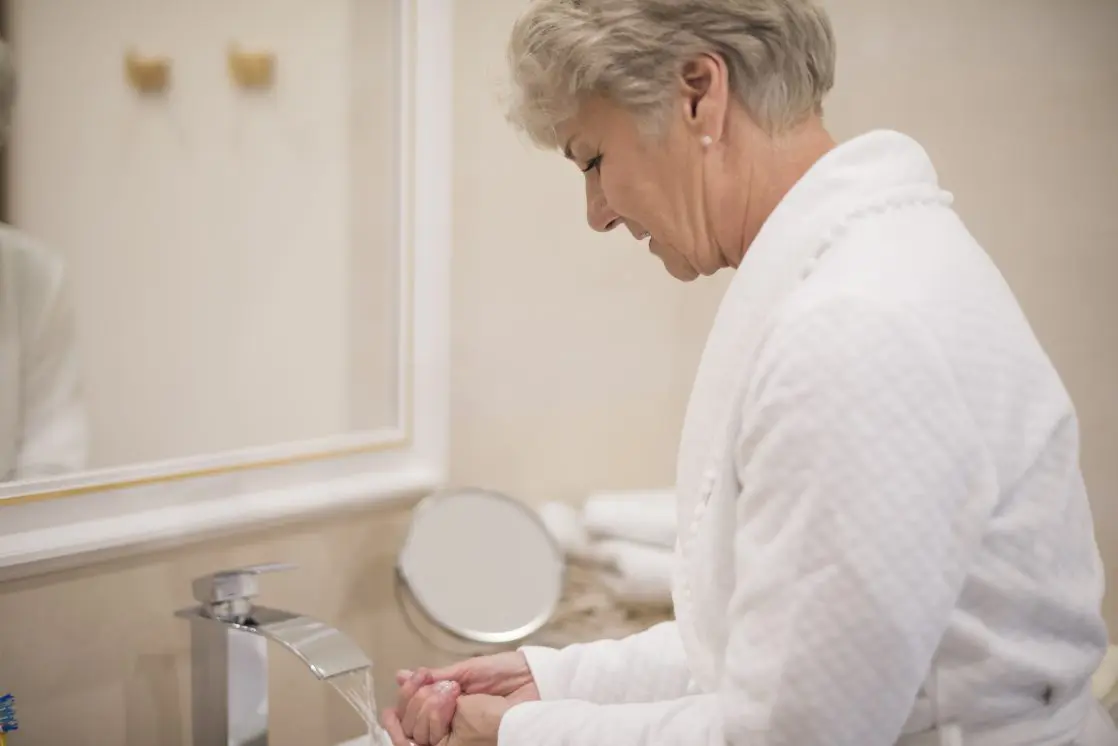
Make Water Safety Part of the Care Plan
Read time: 5 minutes
- Bathing carries the biggest water risks in home care – scalding from reduced temperature sensation and falls on wet surfaces. Grab bars, non-slip mats, and a shower chair are essential.
- Dehydration is a preventable water safety issue. Care plans need fluid intake goals, safe swallowing supports, and water always within reach.
- Water safety should be a named section in every care plan, reviewed at intake and whenever health status changes.
Water safety is a common topic this time of year — and for good reason. But when we talk about water safety in a caregiving context, we’re not usually talking about the pool.
For most people receiving moderate to advanced levels of care, the water risks that matter are much closer to home. They’re in the bathroom. At the kitchen tap. In a glass left out of reach. And they deserve just as much attention as any outdoor hazard.
Here’s how to think about water safety when you’re building or reviewing a care plan.
Bathing Safety: Where Most Water Risks Live
Assisted bathing is one of the higher-risk routines in home care — not because it’s inherently dangerous, but because it involves water, skin, temperature sensitivity, and mobility all at once.
Temperature is a real concern. Older adults and individuals with certain medical conditions (diabetes, neuropathy, reduced circulation) may not feel heat the way others do. Water that feels comfortable to a caregiver can cause scalding in minutes for someone with reduced sensation. A simple thermometer or adjustable water temperature setting at the source can prevent a serious injury.
Surfaces and transfers matter. Wet floors, tub edges, and shower transitions are fall hazards. Non-slip mats, grab bars, and a proper shower chair or bench should be standard safety equipment for anyone receiving bathing assistance. If these aren’t in place, that’s the conversation to have first.
Supervision level should match the person, not a checklist. Some individuals can manage a shower with verbal prompting only. Others need hands-on assistance throughout. The care plan should be specific about what’s appropriate — and caregivers should be trained to recognize when that level needs to change.
Hydration: A Water Safety Essential
Dehydration is one of the most common and preventable health issues in older adults and individuals with complex care needs — and it’s a water safety problem.
People who rely on others for their daily routines may not be able to get a glass of water when they want one. They may have swallowing difficulties that make drinking uncomfortable or unsafe without the right supports. They may have medications that increase fluid loss. Or they may simply not feel thirsty, which is a well-documented change that comes with age.
A care plan that addresses water safety should include:
- Fluid intake goals and how they’ll be tracked
- Positioning for safe swallowing, especially for anyone with dysphagia
- Fluid consistency if thickened liquids are required
- Water accessibility — is there always a drink within reach?
- Caregiver reminders to offer fluids regularly, not just on request
Around the Home: Water Hazard Beyond the Bathroom
Water spills are a leading contributor to falls in the home. A wet floor from an overflowing sink, a leaking appliance, or a spilled glass can go unnoticed — especially if the person receiving care can’t call attention to it quickly.
Care plans and home safety assessments should include:
- Regular checks for leaks, drips, or standing water in key areas
- Spill response protocols so caregivers know what to do and how quickly
- Flooring considerations — are there areas that become particularly slippery when wet?
- Medication storage away from water sources to prevent accidental exposure or degradation
- For a broader look at safety equipment worth considering, see our guide to home safety must-haves for seniors.
A Note on Seasonal Programs
Swimming, boating and water recreation is possible for adults with physical or cognitive limitations, and they can be wonderful when the right supports are in place. If this is something your loved one is interested in, talk to their doctor about what modifications or supervision would be needed, and apply common sense – stay in the shallow end of the pool, never swim alone, wear a lifejacket at all times on a boat. For general water safety guidance, the Lifesaving Society BC & Yukon’s WaterSmart® education resources are a great place to start.
Building Water Safety Into the Care Plan
Water safety should be a named section in any comprehensive care plan. That means reviewing it at intake, revisiting it when health status changes, and making sure every caregiver involved understands the specific risks and protocols for that individual.
If you’re not sure where your current plan stands, that’s a good question to bring to your next care review.
myCareBase supports families and caregivers in navigating every stage of the care journey. If you have questions about building a care plan that covers the full picture, we’re here to help.