
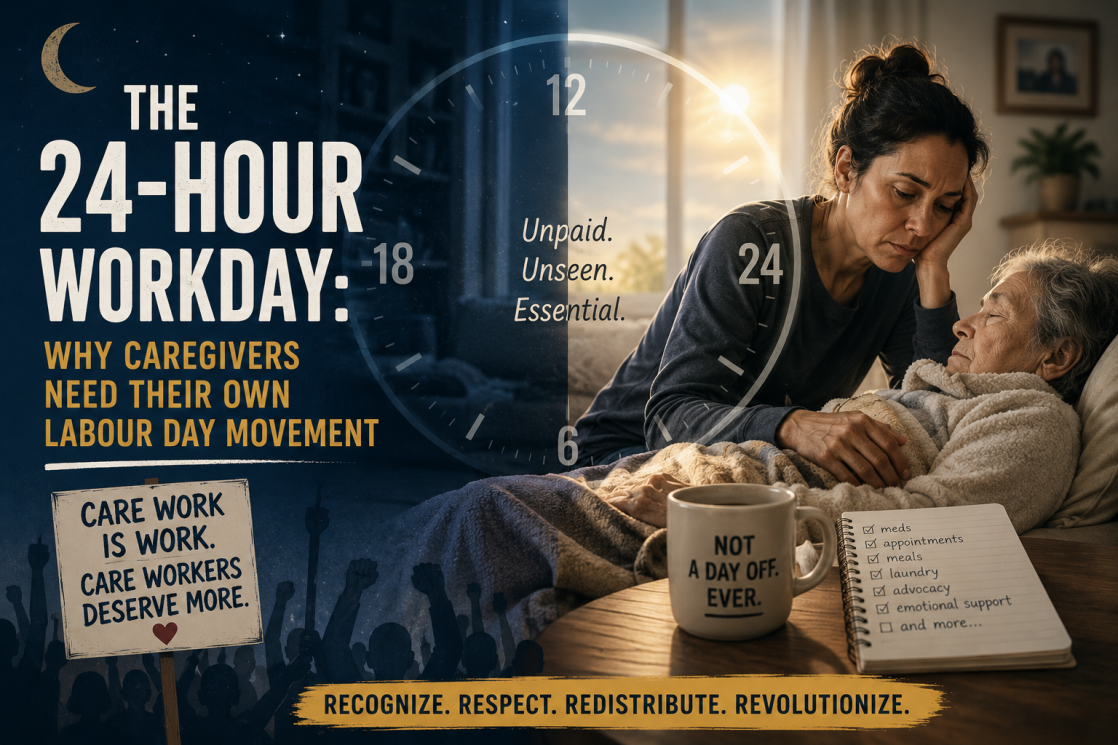
The 24-Hour Workday: Why Caregivers Need Their Own Labour Day Movement
Read time: 5 minutes
- Draws on 1872’s Toronto printer strike (which won the 9-hour workday and led to Labour Day) as a parallel for today’s unregulated caregiver “shift.”
- Family caregivers face a 24/7, no-days-off workload that mirrors the exact conditions those strikers protested – leading to burnout and isolation.
- Calls for a caregiver movement built on respite care, economic recognition, and workplace flexibility.
Every September, Canadians fire up their barbecues and enjoy a long weekend. We rightly use Labour Day to celebrate the hard-won victories of the workforce. But if you look past the parades, a quiet crisis is happening in households across the country. Millions of family caregivers are working a grueling shift that never ends.
To understand why this is a modern crisis, we must look back at why Labour Day exists in the first place. The holiday was born from a refusal to let work consume a human being’s entire life.
The Birth of the Nine-Hour Movement
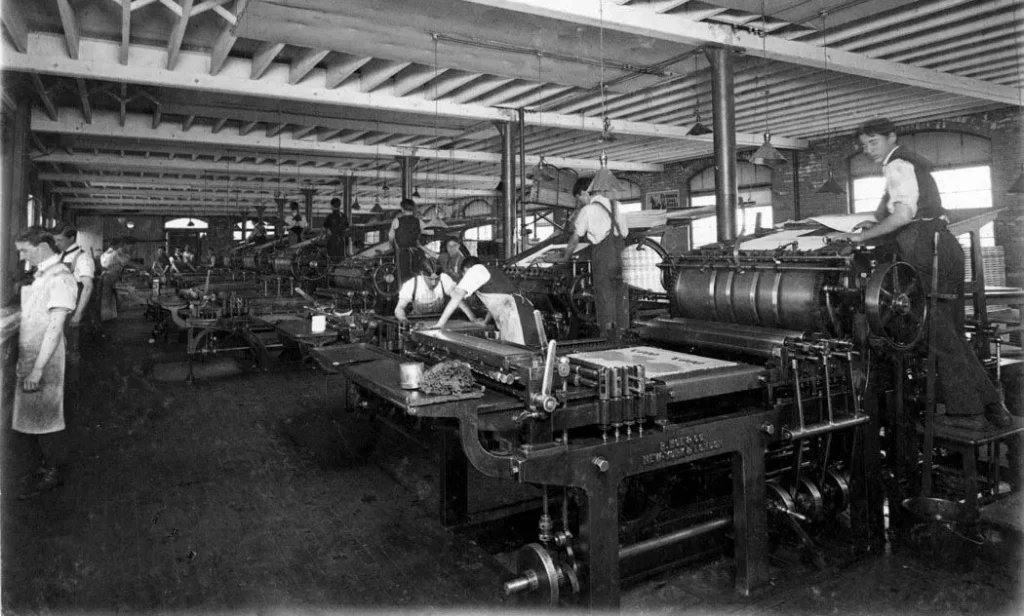
In 1872, the concept of work-life balance did not exist. Industrial workers in Canada routinely faced grueling 12-hour workdays, six days a week. Human endurance was pushed to the absolute brink.
On March 25 of that year, the Toronto Typographical Union decided enough was enough. They went on strike, demanding a capped nine-hour workday.
The strike was met with fierce resistance. Employers fought back, and union leaders were jailed for criminal conspiracy under outdated laws.
However, the printer strike ignited a massive wave of solidarity. On April 14, over 10,000 workers marched through the streets of Toronto. The public pressure forced Prime Minister Sir John A. Macdonald to pass the Trade Unions Act, legalizing unions across Canada.
By 1894, Prime Minister John Thompson officially declared Labour Day a national holiday. It stands as a monument to a simple, powerful truth: every worker has the right to rest, boundaries, and a life outside of their labor.
The 24-Hour Shift: Caregiving as Invisible Labour
While industrial workers successfully fought to cap their hours over a century ago, a different kind of workforce has been left behind. This workforce wears no uniform, clocks into no factory, and receives no paycheck.
They are Canada’s family caregivers.
1872 Industrial Shift: 12 Hours (Protested as inhumane)
Modern Caregiver Shift: 24 Hours (Unregulated)
Whether you are supporting an aging parent with dementia, managing elder care for a spouse, or coordinating complex medical schedules, you are performing intensive labor. Caregiving requires heavy physical lifting, meticulous medication management, and constant emotional stamina.
The core difference between a regular job and family caregiving comes down to hours:
- No clock-out time: Caregiving does not end at 5:00 PM.
- Night shifts: A senior waking up disoriented at 3:00 AM requires immediate attention.
- No weekends: Chronic illnesses, cognitive decline, and physical frailties do not take statutory holidays off.
Family caregivers are essentially trapped in a 24-hour workday, seven days a week.
Caregiver Burnout

When the 19th-century printers went on strike, they warned that working twelve hours a day would break a person’s physical and mental health. Today, we see that exact prophecy playing out in the home care sector.
Working without a corporate limit or a union contract leads directly to caregiver burnout.
Burnout is not simple fatigue. It is a profound, systemic state of physical, emotional, and mental exhaustion. Caregivers regularly sacrifice their own medical appointments, skip their own meals, and isolate themselves from friends to maintain their care duties.
Because society views this labor as a “family duty” rather than actual work, caregivers rarely get the systemic support they need. They are left to run a marathon at a sprinter’s pace, with no finish line in sight.
Is it time for a Caregiver’s Labour Movement?
Honouring the history of Labour Day means recognizing where workers are still being exploited by unsustainable hours. We must apply the fierce spirit of the 1872 printers to the modern reality of elder care.
Family caregivers desperately need their own movement. We must advocate for structural changes that protect the health of those providing the care:
- Universal Respite Care: Access to temporary, professional relief care must be treated as a fundamental right, allowing caregivers to “clock out” and rest.
- Economic Recognition: Unpaid caregiving saves the Canadian healthcare system billions of dollars annually; this labor should be supported through robust tax credits and financial allowances.
- Workplace Flexibility: Employers need to offer flexible hours,caregiving leave and eldercare supports so Canadians do not have to choose between their livelihoods and their parents.
This Labour Day, let us loudly celebrate the trade unionists who won us the eight-hour day. But let us also look inside our neighborhoods and homes. It is time to support the invisible workforce, establish boundaries for elder care, and ensure that no caregiver is forced to work a 24-hour shift alone.